Raspberry Pi Pixel Desktop Released For Mac
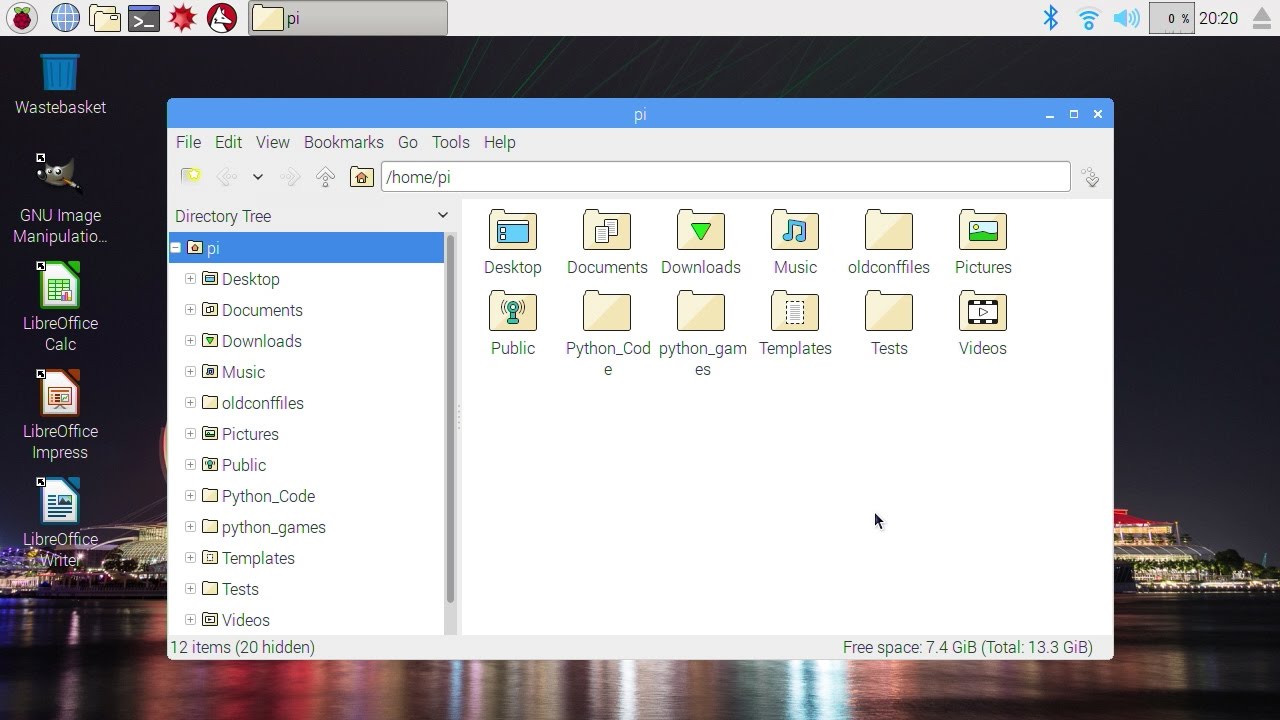
The Raspberry Pi Foundation has released the OS it crafted to be the standard system for its own ARM mini computers, to PC and Mac users. As a 'Christmas Treat' coders working for the organisation have spent the last three months porting a version of Debian+Pixel for x86 platforms. A disc image has been created for simple burning onto DVD or USB flash, so PC and Mac users can simply reboot and work in the Pixel environment.
The Pixel desktop was only released for RasPi users back in September. Raspberry Pi Founder Founder Eben Upton said that it was designed with the following at the forefront of its creators' minds:
'Pixel represents our best guess as to what the majority of users are looking for in a desktop environment: a clean, modern user interface; a curated suite of productivity software and programming tools, both free and proprietary; and the Chromium web browser with useful plugins, including Adobe Flash, preinstalled. And all of this is built on top of Debian, providing instant access to thousands of free applications.
Put simply, it’s the GNU/Linux we would want to use.'
Mar 28, 2017 On this tutorial I show you how to run Mac OS 7 color on your Raspberry PI, I have also included a compiled version for Windows. I had so much fun while getting this working and spend more time then I care to admit playing old games. Thanks for the view!! Equipment List: Raspberry Pi 3 Amazon Ebay. Software List. The Raspberry Pi Foundation released a bootable image enabling owners of Windows PCs and Macs to use the new Pixel desktop environment with Debian. The image is free to use and is offered on DVD.
One of the main reasons to spend this time and effort porting the Pixel desktop to PC and Mac users was to simply share the wealth, Upton explains. In particular it is thought that schools might be interested in running Pixel on their standard installed bases of PCs, at least sometimes with the easy boot option available. Furthermore, the foundation is ambitious to create the best desktop environment, not just on its own mini computers, but for the large base of PCs, Macs, and Linux machines out there.
The Pixel desktop is said to be very light on resource demands, despite its modern and friendly appearance. It can run on the i386 architecture upwards, as long as the system comes with at least 512MB of RAM installed. Running from a USB stick is recommended as it will be faster than a live DVD install and unused space on the flash device will automatically be used for storage of files and OS persistence. Running from a live DVD image with the requirement of persistence adds an extra step when first booting - that of creating a persistence partition on your fixed disk.
Whatever route you might take to test, use, or install Pixel on an old machine, it is recommended you do a backup first in case things go awry. Please remember too, that this newly released OS and desktop for PCs and Macs is still 'a prototype rather than a final release version'.
Pixel represents our best guess as to what the majority of users are looking for in a desktop environment: a clean, modern user interface; a curated suite of productivity software and programming tools, both free and proprietary. Toontrack ezdrummer ezx latin percussion hybrid dvdr airiso.
It also includes the Chromium web browser with useful plugins, including Adobe Flash, preinstalled. And all of this is built on top of Debian, providing instant access to thousands of free applications.
Put simply, it’s the GNU/Linux we would want to use.
Back in the summer, we asked ourselves one simple question: if we like PIXEL so much, why ask people to buy Raspberry Pi hardware in order to run it? There is a massive installed base of PC and Mac hardware out there, which can run x86 Debian just fine. Could we do something for the owners of those machines?
So, after three months of hard work from Simon and Serge, we have a Christmas treat for you: an experimental version of Debian+PIXEL for x86 platforms. Simply download the image, burn it onto a DVD or flash it onto a USB stick, and boot straight into the familiar PIXEL desktop environment on your PC or Mac.
You’ll find all the applications you’re used to, with the exception of Minecraft and Wolfram Mathematica (we don’t have a licence to put those on any machine that’s not a Raspberry Pi). Because we’re using the venerable i386 architecture variant it should run even on vintage machines like my ThinkPad X40, provided they have at least 512MB of RAM.
Instructions:
Download the image, and either burn it to a DVD or write it to a USB stick. For the latter, we recommend Etcher.
Insert the DVD or USB stick into your PC or Mac, and turn it on. On a PC, you will generally need to enable booting from optical drive or USB stick in the BIOS, and you will have to ensure that the optical drive or USB stick is ahead of all other drives in the boot order. On a Mac, you’ll need to hold down C during boot*.
If you’ve done that correctly, you will be greeted by a boot screen. Here you can press escape to access the boot menu, or do nothing to boot through to the desktop.
We are aware of an issue on some modern Macs (including, annoyingly, mine – but not Liz’s), where the machine fails to identify the image as bootable. We’ll release an updated image once we’ve got to the bottom of the issue.
Persistence
If you are running from DVD, any files you create, or modifications you make to the system, will of course be lost when you power off the machine. If you are running from a USB stick, the system will by default use any spare space on the device to create a persistence partition, which allows files to persist between sessions. The boot menu provides options to run with or without persistence, or to erase any persistence partition that has been created, allowing you to roll back to a clean install at any time.
Disclaimer
One of the great benefits of the Raspberry Pi is that it is a low-consequence environment for messing about: if you trash your SD card you can just flash another one. This is not always true of your PC or Mac. Consider backing up your system before trying this image.
Raspberry Pi can accept no liability for any loss of data or damage to computer systems from using the image.

Software similar to Raspberry Pixel OS 7
- 408 votesKali Linux is an advanced penetration testing Linux distribution used for penetration testing, ethical hacking and network security assessments. Official images hosted by us for faster downloads.
- Freeware
- Windows
- 108 votesTails is a live operating system, that you can start on almost any computer from a DVD, USB stick, or SD card. It aims at preserving your privacy and anonymity on any computer.
- Freeware
- Windows
- 109 votesDownload the latest version of the Linux operating system.
- Freeware
- Linux